
Read the article
here.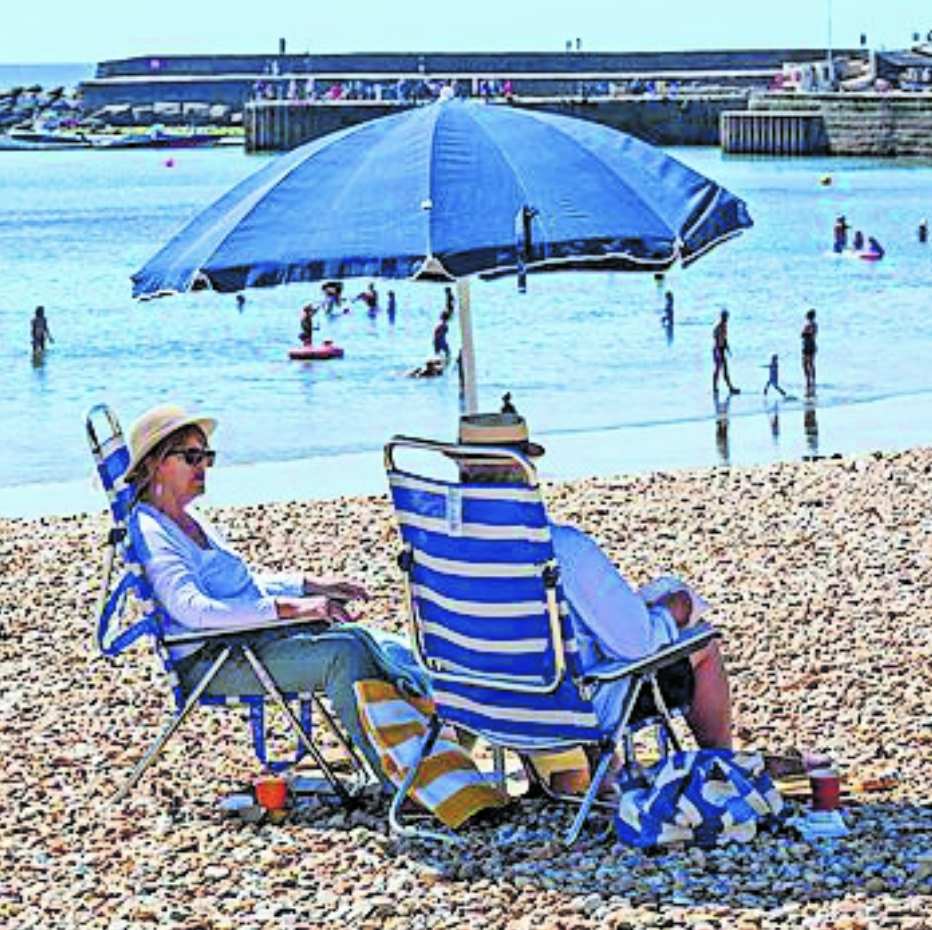
A week before the temperature soared to a record-breaking 34.8C on bank holiday Monday last month, leading weather forecasters gave barely a hint that a heatwave was on the horizon.
At its headquarters in Reading, the European Centre for Medium-Range Weather Forecasts (ECMWF) was predicting temperatures in the low twenties across much of England.
In Redwood City, California, however, the startup WindBorne Systems predicted temperatures of about 30C.
As temperatures surged on the bank holiday, households across Kent found their taps were running dry. South East Water blamed the outages on high usage during the heat. Locals told The Times, however, that they would have reduced their usage beforehand if the company had warned of the heatwave.
Kai Marshland, WindBorne’s chief product officer, said the water outages were an example of the many problems the world could solve with better weather forecasts. This month the company, founded by Marshland with three fellow Stanford graduates in 2019, released a new version of its forecast AI, WeatherMesh. Marshland said that its warnings were accurate up to four days before ECMWF’s day-ahead forecast.
“There’s a huge opportunity here,” he added.
The release of the model — to WindBorne’s clients including the US Air Force but not the general public — is a milestone for a company that began as a student project.
Its founders set out in 2015 to design more durable weather balloons. Every day around the world, meteorologists launch about 1,000 of these devices to measure wind speed and temperatures.
Most last a few hours before popping, meaning that swathes of the planet are unobserved.
Marshland, 29, said that WindBorne launched a balloon last year that has “been in the air longer than my nephew has been alive”.
The startup now has nearly 500 balloons in the air and a data-sharing contract with the US National Oceanic and Atmospheric Administration. The company’s mission now is to feed the improved data into its AI model to predict weather patterns.
Historically, meteorologists have devised their forecasts by using supercomputers to simulate the behaviour of the atmosphere. In recent years, however, so-called “physics-based” models have faced competition from AI-based models, which sort through historical weather data to identify patterns.
By seeing how weather systems have developed in the past, they guess how they will develop in the future.
Paris Perdikaris, a maths professor at the University of Pennsylvania, said that he expected most weather forecasts to be AI-generated in the next two years.
WindBorne now plans to create a “planetary nervous system” of 10,000 balloons to improve weather forecasts.
Marshland said better predictions could help humanity through warnings of bush fires or identify tail winds to reduce flight times for aircraft. The company is working with the Gates Foundation to help farmers in sub-Saharan Africa predict when the life-giving rains will come.
The Met Office is also testing AI. Edward Steele, a fellow for data science, said:
“We see the future as being a mix of physics-based and AI-based weather models to deliver the benefits of both.”


